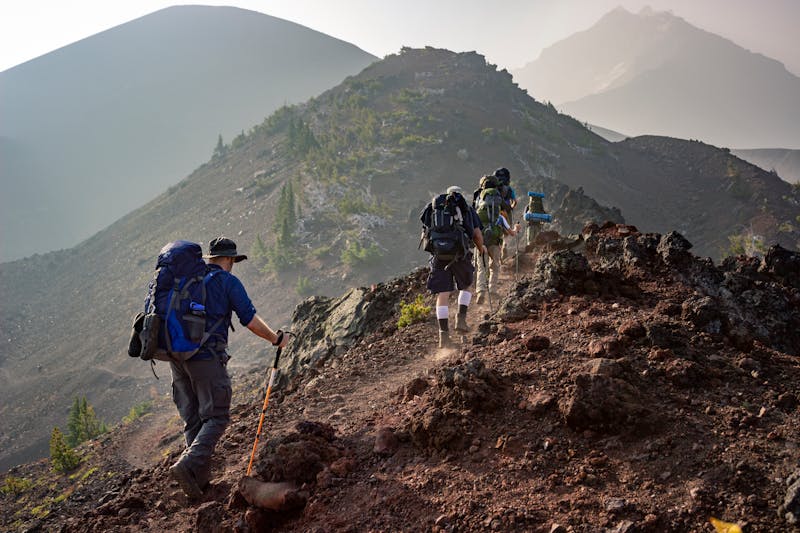
Packing for Mount Rainier is essentially packing for two different climates in one bag — the Longmire valley floor (2,760 ft) where you park, and Paradise or Sunrise (5,400–6,400 ft) where you hike. The temperature difference between these elevations is typically 15–20°F, and afternoon weather above treeline can change from clear to rain-and-wind in 20 minutes. The right kit isn't complicated, but a few specific items — a shell, real hiking boots, and a water plan — are the difference between a great day and a miserable one. Here's exactly what to bring, organized by season and hike type.
The One Rule: No Cotton
Cotton holds moisture and loses all insulating value when wet. At Rainier's elevations, a wet cotton layer accelerates hypothermia in conditions that can arrive with no warning. Wear wool or synthetic for every layer against your skin. This applies to t-shirts, underwear, and socks. Merino wool is the premium option; any synthetic moisture-wicking fabric works. The rest of the packing list builds from this foundation.
Summer Day Hike Packing List (July–September)
This list covers a full-day hike above treeline — Skyline Trail at Paradise, Burroughs Mountain at Sunrise, or any route above 5,000 ft.
Clothing
| Item | Spec | Essential? | Notes |
|---|---|---|---|
| Base layer top | Merino or synthetic, short or long sleeve | ✓ Yes | No cotton. Long sleeve easier to regulate than adding layers mid-hike. |
| Mid-layer (fleece or light down) | Packable fleece or down jacket | ✓ Yes | You will put this on at the ridgeline even in August. |
| Waterproof shell jacket | Gore-Tex or equivalent, fully seam-taped | ✓ Yes | Mandatory. Afternoon rain is common; wind at Panorama Point is significant. |
| Hiking pants or shorts | Quick-dry synthetic; zip-offs useful | ✓ Yes | Add rain pants for fall or shoulder-season hikes above treeline. |
| Merino wool hiking socks | Medium-weight, ankle or crew height | ✓ Yes | Prevent blisters, regulate temperature. Carry a spare pair in pack. |
| Gloves and beanie | Lightweight packable | Recommended | Wind chill above Panorama Point makes 55°F feel like 40°F. |
| Sun hat or cap | Wide brim preferred above treeline | ✓ Yes | UV intensity at 5,400–7,000 ft is significantly higher than at sea level. |
Footwear
- Waterproof hiking boots with ankle support: The #1 most important piece of gear for Rainier above treeline. Volcanic rock, uneven terrain, and possible snow make ankle support essential. Mid-cut or high-cut waterproof boots. Break them in before your trip — blisters at mile 3 ruin a 10-mile day.
- Microspikes: Required October through late June on trails above 4,000 ft. In July, carry them for Burroughs Mountain (above 6,500 ft) and the upper Skyline Trail until mid-month. Not needed for standard summer hiking on maintained lower trails. Refresh House gear library has them; Whittaker Mountaineering rents them.
- Trail runners (optional alternative for lower trails): Acceptable for trails below 4,000 ft in dry summer conditions (Trail of the Shadows, Grove of the Patriarchs, Carbon River Rainforest). Not recommended above treeline.
Daypack Contents
| Item | Amount / Spec | Essential? |
|---|---|---|
| Water | 2–3 liters | ✓ Yes |
| Water filter or purification tablets | Sawyer Squeeze or equivalent | Rec. for lower trails |
| Food and snacks | 400–600 cal / hr hiking | ✓ Yes |
| Sunscreen SPF 50+ | Travel size, reapply at trailhead | ✓ Yes |
| Sunglasses (UV protection) | UV400 or polarized | ✓ Yes |
| Trail map (offline or paper) | AllTrails / Gaia GPS downloaded | ✓ Yes |
| First aid kit | Blister care essential | ✓ Yes |
| Headlamp + spare batteries | Petzl Tikkina or equivalent | ✓ Yes |
| Emergency whistle | Attach to pack zipper | ✓ Yes |
| Space / emergency blanket | Mylar, <2 oz | ✓ Yes |
| Trekking poles | Collapsible aluminum or carbon | Highly rec. |
| Bear canister or hang bag | Required for overnight camping | Day hike: optional |
What Changes by Season
Fall (October–November)
Add to the summer list: rain pants, heavier insulating mid-layer (down jacket), warmer gloves and hat, gaiters for wet trail sections, and microspikes (snow arrives at Paradise elevation in October). The upper Skyline Trail above Panorama Point can have ice by mid-October. Sunrise closes in mid-September. Lower trails at Longmire and Carbon River stay clear. Stevens Canyon Road may close by early November.
Winter and Spring (December–June)
Snowshoeing and winter hiking require a significantly different kit: snowshoes (Refresh House gear library; Paradise Visitor Center rents on weekends), boot gaiters, an ice axe if venturing above 5,000 ft, avalanche awareness (Beacon/Probe/Shovel for backcountry), and layering suited for 20–35°F temperatures at Paradise. The Longmire area is the safest winter destination — lower elevation, more shelter, and year-round accessibility. Do not venture above treeline in winter without appropriate training and equipment.
What to Rent vs. Bring
| Gear Item | Bring | Rent/Borrow | Where to Rent |
|---|---|---|---|
| Hiking boots | ✓ Bring | — | Fit matters too much to rent |
| Trekking poles | Optional | ✓ Borrow | Refresh House gear library (free for guests) |
| Microspikes | Optional | ✓ Borrow/Rent | Refresh House (free) or Whittaker Mountaineering |
| Snowshoes | — | ✓ Rent | Whittaker Mountaineering, Paradise VC weekends |
| Daypack (20–30L) | Optional | ✓ Borrow | Refresh House gear library (free for guests) |
| Headlamp | Optional | ✓ Borrow | Refresh House gear library (free for guests) |
| Rain gear | ✓ Bring | — | Non-negotiable, no good rental options |
| Ice axe / crampons | — | ✓ Rent | Whittaker Mountaineering (+ lessons recommended) |
What to Pack for the Drive and Stay
Beyond trail gear, a few items make a multi-day stay near Rainier significantly better:
- Cash: Cell service ends at the park gate. The Ashford General Store, some parking machines, and a few vendors are cash-only or card-unreliable. Keep $60–80 in small bills.
- Groceries stocked before Ashford: The last full grocery store is Safeway in Eatonville, 20 miles west. Ashford General Store has basics but no fresh produce. Stock a full cooler before your turn onto WA-706.
- Downloaded offline maps: AllTrails Premium, Gaia GPS, or Google Maps offline for the Ashford → park entrance area. Service drops to nothing inside the park.
- Portable charger / power bank: If you're doing longer hikes and relying on a phone GPS with no signal, battery drain is faster. A 20,000 mAh bank lasts 3–4 full hike days.
- Cooler with ice: No resupply inside the park. A quality cooler keeps food for 3–4 days.
- National Park Pass or cash for entry fee: $35 per vehicle (valid 7 days) or an America the Beautiful Annual Pass ($80, covers all federal lands for 12 months). Passes can't be bought at the entrance on peak days — buy at Recreation.gov or a sporting goods store in advance.
The Gear Library at Refresh House
Guests at Refresh House can borrow from a curated gear library without cost — designed specifically to let guests travel light:
- Trekking poles (collapsible, multiple sizes)
- Microspikes (multiple sizes)
- Daypacks (20L and 30L)
- Headlamps
- Laminated trail maps for the key Rainier day hikes
- Bear canister (for Wonderland Trail permits)
This makes it practical to fly to Seattle with carry-on only and rent a car, rather than checking bulky outdoor gear. See the full gear library page for the current inventory.
More planning: current trail conditions · 15 best day hikes with difficulty and distance · beginner hiking guide · month-by-month weather guide · things to do in Ashford WA