The Science of Nature Therapy
For most of human history, the idea that spending time in nature was good for you wasn't a hypothesis — it was simply obvious. People who lived near forests, rivers, and mountains understood intuitively that these environments offered something that built environments could not. It's only recently that researchers have had the tools and methodology to measure precisely what that something is, and the findings are both striking and consistent.
The foundational large-scale study came in 2019, published in Scientific Reports by researchers at the University of Exeter. Analyzing data from 19,806 adults in the United Kingdom, they found that people who spent at least 120 minutes per week in natural environments reported significantly higher levels of health and wellbeing than those who spent no time in nature. Crucially, the benefit plateaued at around 300 minutes per week and showed no additional gain with more time — 120 minutes was the threshold that captured most of the benefit. Less than 120 minutes per week produced no statistically significant improvement.
Japanese researchers studying Shinrin-yoku (forest bathing) have documented more specific physiological effects: a 16% reduction in cortisol (the primary stress hormone), a significant reduction in blood pressure, a measurable improvement in natural killer (NK) cell activity (a marker of immune function), and a reduction in heart rate variability that indicates parasympathetic nervous system activation — the physiological signature of genuine rest.
These effects are not trivial. NK cell activity is the body's primary defense against viral infection and early-stage tumor growth. Cortisol reduction at the levels documented in forest bathing research correlates with improved sleep quality, reduced inflammation, and lower risk of cardiovascular disease over time. Spending a week at Refresh House near Mount Rainier is not a luxury — it is, by the evidence, a health intervention.
Forest Bathing at Mount Rainier
Shinrin-yoku emerged in Japan in the 1980s as a public health initiative responding to the country's epidemic of karoshi (death from overwork) and the chronic stress of urban professional life. The practice is deceptively simple: enter a forest, move slowly, and engage your senses deliberately. There is no destination, no performance metric, no pace goal. The practice is categorically different from hiking, which typically has an objective and a pace.
Mount Rainier's Carbon River zone contains Washington State's only inland temperate rainforest — a Pacific Northwest ecosystem type almost entirely confined to coastal areas that somehow persists here due to an unusual combination of topography and moisture. The Carbon River Rainforest Trail passes through Sitka spruce, Western red cedar, and big-leaf maple that have grown undisturbed for centuries. The nurse logs — massive fallen trees from which new growth erupts — tell the story of a forest ecosystem in which death is simply a different stage of life, not an ending.
A Shinrin-yoku session in the Carbon River rainforest might begin with a few minutes standing still just inside the treeline, eyes closed, listening. The sound layer here is complex: the Puyallup River tributaries creating constant low-register white noise, the percussion of drops falling from high canopy to understory, bird calls from unseen sources above. The smell of damp earth, cedar, and decomposing organic matter is distinct and immediate — research suggests that phytoncides (antimicrobial organic compounds released by trees, particularly conifers) are one of the primary mechanisms by which forest environments improve NK cell activity.
A well-executed session covers 1–2 miles over 2–4 hours. This is not slow hiking. This is closer to standing, noticing, walking twenty feet, standing again. The research protocols that document health benefits typically involve 2–3 hour sessions — the slow, deliberate quality of the practice appears to be essential to the physiological outcome.
Contrast Therapy: Hot Tub and Cold Plunge
Contrast therapy — the deliberate alternation between hot and cold water immersion — has been practiced in some form across Northern European, Russian, Japanese, and Finnish cultures for centuries. The Finnish sauna tradition, Nordic cold-water swimming, and Japanese sento bathing culture all incorporate temperature contrast as a central element. What has changed in recent years is the quality of scientific documentation explaining why this practice produces the benefits practitioners have observed empirically.
The physiological mechanism operates on both the vascular and nervous systems simultaneously. Hot water immersion (100–104°F) causes vasodilation — blood vessels expand, increasing blood flow to the peripheral tissues. Core body temperature rises. Heart rate increases moderately. The parasympathetic nervous system is activated, producing a state of physiological relaxation even as circulation accelerates. Prolonged heat exposure (10–15 minutes) causes the body to release heat shock proteins, which have been linked to improved cellular repair and longevity signaling.
Cold water immersion (50–59°F) produces the opposite: vasoconstriction, reduced peripheral blood flow, and activation of the sympathetic nervous system — the fight-or-flight response in its mildest form. The body releases norepinephrine (a neurotransmitter and hormone associated with alertness and improved mood) at levels comparable to moderate exercise. Cold exposure also reduces inflammatory markers, which makes it particularly effective for post-hike recovery when muscle damage has occurred.
The alternation between these two states — repeated 3–4 times — produces a "vascular pump" effect that enhances lymphatic circulation, accelerates the removal of metabolic waste products from muscles, and delivers a sustained mood elevation through the norepinephrine release that persists for several hours after the session. Sports medicine research has documented reductions in delayed onset muscle soreness (DOMS) of 15–20% following contrast therapy sessions after high-exertion exercise, compared to passive rest.
At Refresh House, the hot tub is maintained at 102°F and the cold plunge at 55°F — temperatures that sit within the optimal range for both therapeutic protocols and comfort. The recommended sequence for most guests: 3–4 minutes in the hot tub, 1–2 minutes in the cold plunge, repeated 3–4 times. For maximum relaxation before sleep, end with the hot tub. For maximum alertness and energy — ideal after a morning session before a workday — end with cold.
Movement as Medicine: Hiking as Therapeutic Practice
The cardiovascular and musculoskeletal benefits of hiking are well-established and need little explanation. What is less commonly appreciated is the specific neuroscientific mechanism by which rhythmic, bilateral movement through natural environments produces cognitive and emotional benefits beyond standard aerobic exercise.
A landmark study at Stanford University (2015) found that participants who walked for 90 minutes in a natural environment showed significantly reduced neural activity in the subgenual prefrontal cortex — a brain region associated with rumination and negative self-referential thought — compared to participants who walked for the same duration in an urban environment. The effect was not explained by cardiovascular factors alone: the natural environment itself was a variable that independently reduced self-referential rumination.
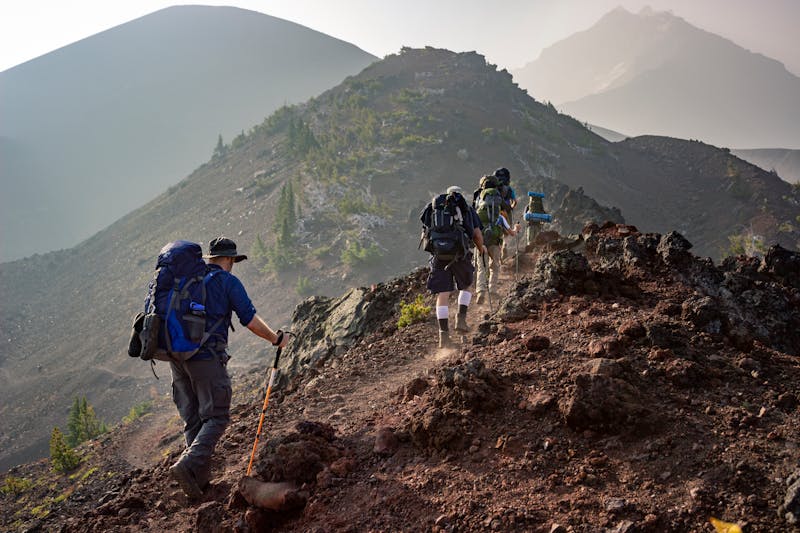
The practical translation: a hike at Mount Rainier is not simply exercise that happens to have a nice view. It is an environment-specific cognitive intervention that produces measurable reductions in the patterns of thought most associated with anxiety, depression, and burnout. For remote workers who spend their professional lives in abstract, screen-mediated mental work, hiking in a complex natural environment provides a kind of cognitive activation that is difficult to replicate in any other context.
The gear library at Refresh House includes hiking poles (which add an upper-body element to the cardiovascular work and reduce knee strain on descents), traction devices for early and late season trail conditions, and binoculars for wildlife observation — an activity that research shows further enhances attention restoration by requiring focused, sustained, pleasurable attention in the present moment.
Sleep in the Mountains
Sleep quality at altitude and in natural environments is measurably different from sleep in urban settings. The mechanism is multifactorial: reduced ambient noise (the background sound level of a forest night is dramatically lower than even a quiet residential neighborhood), reduced artificial light exposure, lower average temperatures (the Pacific Northwest nights near Mount Rainier average 45–55°F in summer, well within the optimal sleep temperature range of 60–68°F with appropriate bedding), and the circadian reset that comes from genuine light-dark cycling without the constant photonic stimulation of screen environments.
Sleep researchers consistently find that the first two nights in a natural, quiet environment involve more time in deep (slow-wave) sleep than the same individual's typical urban baseline — a phenomenon sometimes called "first-night recovery" that reflects the degree to which chronic urban noise and light exposure suppress deep sleep. By the third or fourth night, most guests report the deepest, most restorative sleep they've experienced in months.
Practical recommendations for maximizing sleep quality at Refresh House: spend at least 20 minutes outside in natural light within an hour of waking to anchor your circadian clock to the natural light cycle. Avoid screens for at least an hour before bed. Use the contrast therapy protocol (hot tub, then cold plunge, then hot tub) in the early evening — the subsequent drop in core body temperature after heat immersion is one of the most reliably effective sleep-onset triggers known to sleep science.